Key Takeaway:
Nattokinase and bromelain work through complementary mechanisms for spike protein detox. Nattokinase excels at dissolving fibrin microclots, while bromelain reduces NF-kB-driven inflammation. Research and the McCullough Protocol support taking both together for maximum benefit.
Quick Answer:
Neither nattokinase nor bromelain is strictly "better" — they target different aspects of spike protein pathology. Nattokinase (2,000 FU twice daily) dissolves fibrin clots; bromelain (500 mg daily) reduces inflammation. The most effective approach, supported by published research, is to take both on an empty stomach.
If you have been researching spike protein detox, you have almost certainly encountered two enzymes that appear repeatedly in every serious protocol: nattokinase and bromelain. Both are proteolytic (protein-degrading) enzymes. Both have research behind them. Both appear in the McCullough Protocol. But they are not the same compound, and they do not work the same way.
This article provides the most comprehensive side-by-side comparison of nattokinase vs bromelain for spike protein detox available online — covering mechanism of action, specific research, dosage, side effects, cost, availability, and whether (and how) to take them together.
What Is Nattokinase?
Nattokinase Bacillus subtilis natto derived
Nattokinase (NK) is a serine protease enzyme extracted from natto — a traditional Japanese food made from soybeans fermented with the bacteria Bacillus subtilis var. natto. It was first isolated in 1987 by Dr. Hiroyuki Sumi at the University of Chicago, who was testing 173 foods for fibrinolytic (clot-dissolving) activity. Natto won decisively.
Nattokinase's primary and most famous activity is fibrinolysis: it directly dissolves fibrin, the protein mesh that forms the structural scaffold of blood clots. In the context of spike protein pathology, this matters enormously because one of the most well-documented harms of circulating spike proteins is their ability to induce aberrant fibrin clot formation — a phenomenon Dr. Resia Pretorius and colleagues at Stellenbosch University have termed "microclots" or "fibrin amyloid microclots."
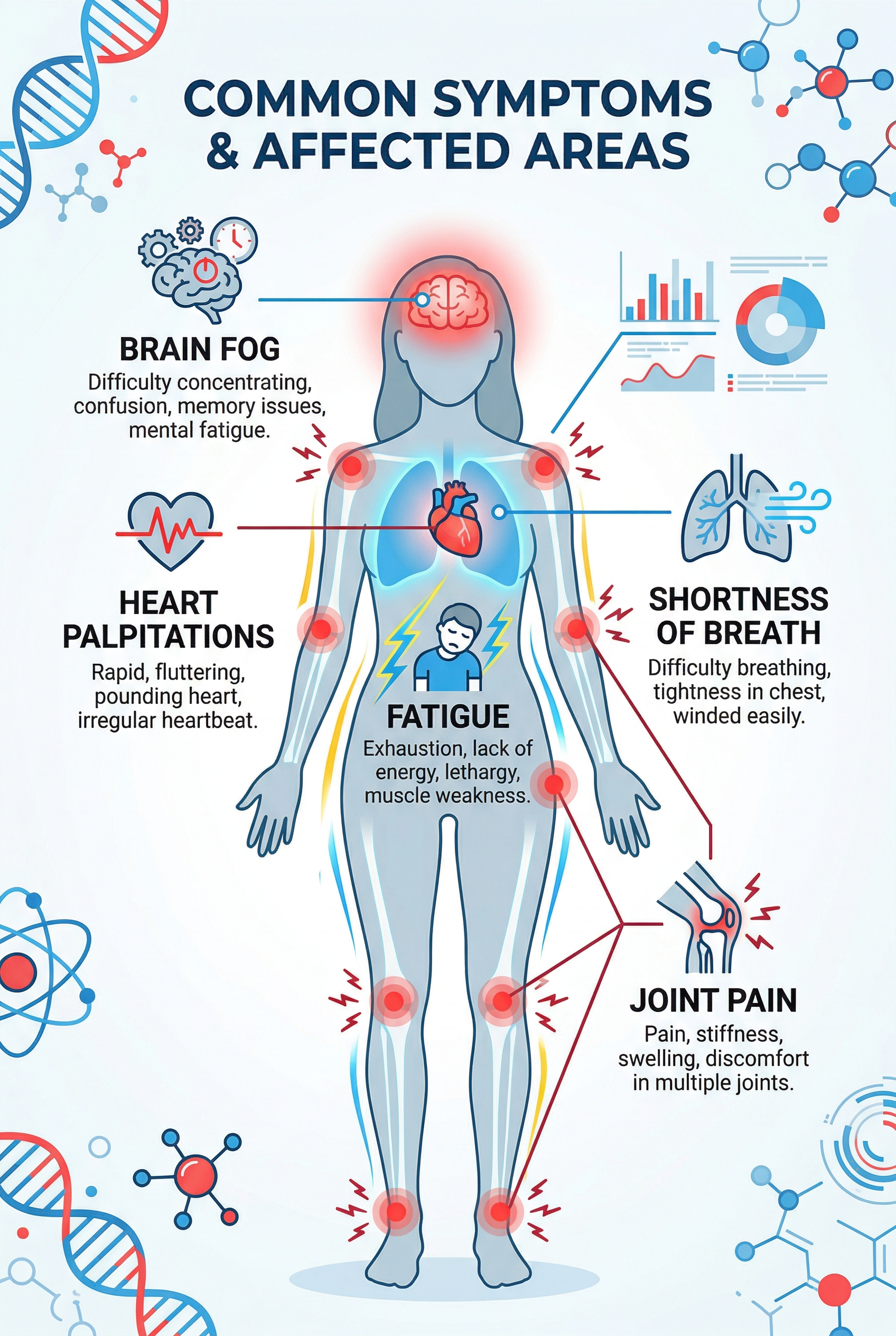
These microclots are abnormally resistant to the body's natural fibrinolytic system (primarily plasmin). They persist in the circulation, potentially blocking capillaries, reducing oxygen delivery to tissues, and contributing to many of the characteristic symptoms of long COVID: fatigue, brain fog, shortness of breath, and exercise intolerance. Nattokinase, with its potent fibrinolytic activity comparable to pharmaceutical thrombolytics, can directly degrade these microclots.
Direct Spike Protein Degradation
Beyond its cardiovascular fibrinolytic activity, nattokinase has been directly demonstrated to degrade spike proteins. The landmark paper — Tanikawa et al. (2022), published in Circulation Journal and indexed on PubMed as PMC9458005 — showed that nattokinase was able to degrade the SARS-CoV-2 spike protein in vitro. The researchers found that nattokinase cleaved the spike protein's S1 subunit, the region responsible for ACE2 receptor binding, suggesting a direct mechanism by which nattokinase reduces spike protein-mediated cellular damage.
Key Properties of Nattokinase
- Molecular weight: 27.7 kDa — small enough for intestinal absorption
- Activity measured in: FU (fibrinolytic units) — not milligrams
- Stability: Stable at body temperature and intestinal pH; activated by the digestive environment
- Half-life in circulation: Approximately 8-12 hours
- Mechanism: Serine protease; fibrinolytic; directly degrades spike protein S1 subunit
- Research base: Over 17 clinical studies in humans; the best-studied proteolytic enzyme for cardiovascular and spike protein applications
Nattokinase Dosage
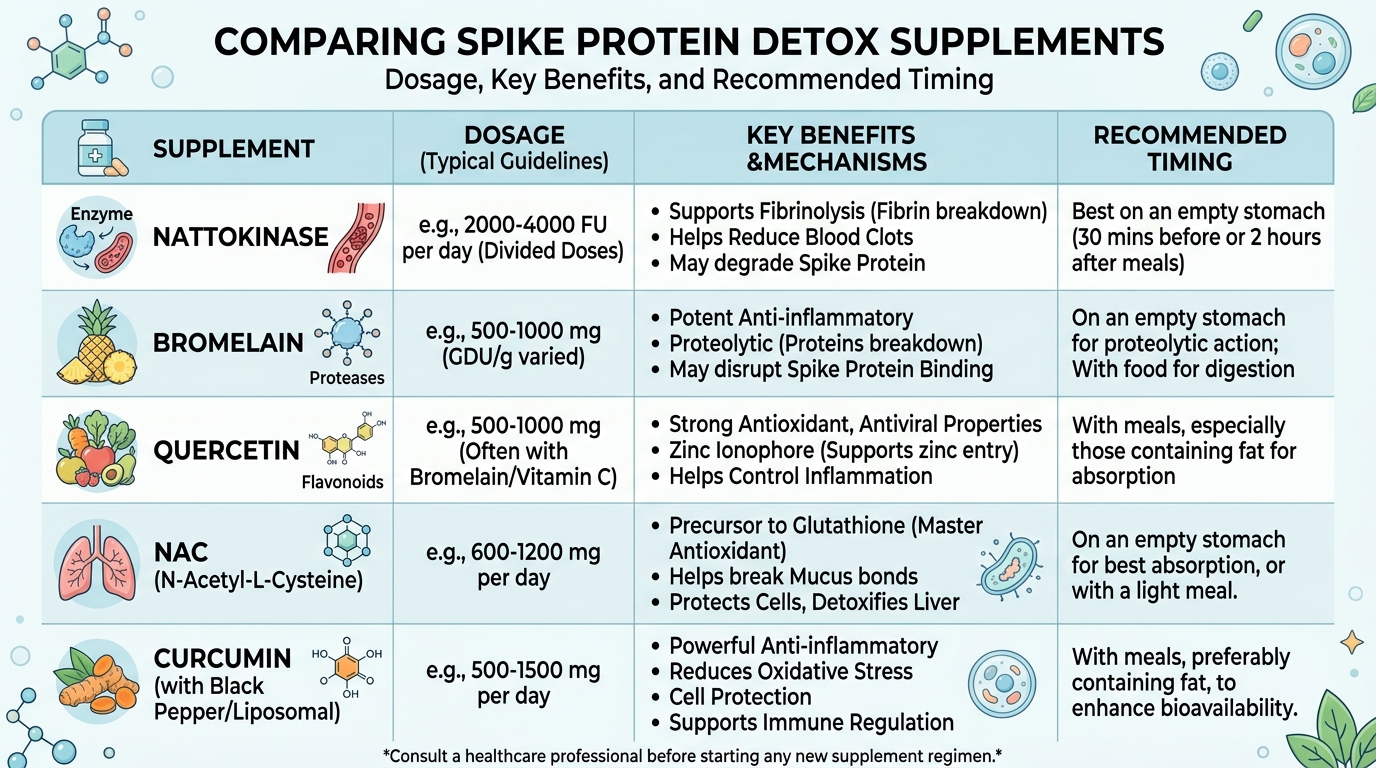
Dosage is always expressed in FU (fibrinolytic units), not milligrams, because the therapeutic value is in enzyme activity, not mass. Standard supplemental doses range from 2,000 FU to 4,000 FU daily. The McCullough Protocol uses 2,000 FU twice daily (morning and evening), taken on an empty stomach — meaning 30-60 minutes before a meal or 2+ hours after eating. This is because food (especially protein) competes with the enzyme for absorption.
What Is Bromelain?
Bromelain Pineapple stem derived
Bromelain is a collective term for a family of cysteine proteases (protein-cleaving enzymes) found in pineapple — primarily in the stem, though also in the fruit. It was first isolated in the 1890s by the Venezuelan chemist Vicente Marcano, though its therapeutic use was not systematically studied until the 1950s when European researchers began investigating its anti-inflammatory properties.
Unlike nattokinase — which has one star activity (fibrinolysis) backed by very specific spike protein research — bromelain is a broader-spectrum therapeutic enzyme. It has documented activity across multiple pathological processes relevant to spike protein damage: proteolysis (protein degradation), anti-inflammation, immune modulation, mucolytic activity, and fibrinolysis (though less potent than nattokinase in this regard).
For spike protein applications specifically, bromelain's most important documented mechanism is its ability to directly degrade spike proteins through proteolytic cleavage. A 2020 study found that bromelain, alone and in combination with acetylcysteine (NAC), significantly reduced SARS-CoV-2 spike protein on the surface of cells. This is a distinct and complementary mechanism from nattokinase's fibrinolytic activity.
Anti-Inflammatory Mechanisms
Bromelain's anti-inflammatory activity — arguably its most clinically documented property — operates through multiple pathways simultaneously:
- Inhibits NF-kB signaling (the master inflammation switch that spike proteins activate)
- Reduces production of pro-inflammatory cytokines: TNF-alpha, IL-6, IL-1β
- Decreases COX-2 enzyme activity (similar mechanism to ibuprofen but without gastric damage)
- Modulates T-cell and NK cell activity
- Reduces edema and tissue swelling
This anti-inflammatory profile makes bromelain particularly valuable for long COVID patients experiencing chronic fatigue, joint pain, muscle aching, and neuroinflammation — symptoms that nattokinase (primarily a fibrinolytic) addresses less directly.
Key Properties of Bromelain
- Molecular weight: 28-33 kDa; intestinally absorbable
- Activity measured in: GDU (gelatin dissolving units) or MCU (milk clotting units) — or mg at standardized activity
- Mechanism: Cysteine protease; anti-inflammatory; direct spike protein proteolysis
- Stability: Active across a wide pH range (3.5-9.0) making it effective throughout the GI tract
- Research base: Extensively studied; over 1,600 published papers; well-established safety profile
- Natural food source: Fresh pineapple stem (destroyed by cooking or canning)
Bromelain Dosage
The McCullough Protocol recommends 500mg of bromelain twice daily, taken on an empty stomach. Look for products standardized to at least 2,400 GDU/g activity. Like nattokinase, bromelain must be taken away from food to ensure proteolytic activity reaches the bloodstream rather than being used to digest food proteins.
Head-to-Head Comparison
| Factor | Nattokinase | Bromelain | Winner |
|---|---|---|---|
| Primary mechanism | Fibrinolysis (clot dissolution) | Anti-inflammation + proteolysis | Complementary (different roles) |
| Direct spike protein research | Yes — PMC9458005 (in vitro spike degradation) | Yes — spike surface protein reduction (2020 study) | Nattokinase (more specific research) |
| Microclot dissolution | Excellent — primary mechanism | Mild fibrinolytic activity; supplementary | Nattokinase |
| Anti-inflammatory activity | Indirect (via reducing fibrin clot-driven inflammation) | Direct, potent — inhibits NF-kB, TNF-α, IL-6, COX-2 | Bromelain |
| McCullough Protocol dose | 2,000 FU twice daily | 500mg twice daily | N/A |
| Must take on empty stomach | Yes — 30-60 min before eating | Yes — 30-60 min before eating | Tie |
| Blood thinner interaction | Yes — significant; discuss with doctor | Mild — monitor if on anticoagulants | Bromelain (safer profile) |
| Typical monthly cost | $25-45 (quality brands) | $12-25 (quality brands) | Bromelain (more affordable) |
| Availability | Widely available online; rare in pharmacies | Very widely available; found in most health stores | Bromelain |
| Natural food source | Natto (Japanese fermented soybeans) | Fresh pineapple stem | Bromelain (more accessible food source) |
| GI side effects | Rare; occasional nausea if taken with food | Occasional GI upset; rare allergic reactions (pineapple allergy) | Nattokinase (slightly) |
| Vegetarian/vegan | Yes | Yes | Tie |
| Synergy with NAC | Good (complements via different mechanism) | Excellent — direct synergy documented in Bhatt et al. 2020 | Bromelain |
| Best for | Cardiovascular symptoms, microclots, fatigue, shortness of breath | Inflammation, joint pain, brain fog, immune modulation | Both have distinct indications |
Can You Take Both Together?
Not only can you take nattokinase and bromelain together — the evidence strongly suggests you should. The McCullough Protocol includes both for precisely this reason: they work through complementary and synergistic mechanisms, covering different aspects of spike protein pathology that neither can address alone.
- Nattokinase directly degrades spike protein (S1 subunit cleavage), dissolves fibrin microclots, and restores normal blood flow
- Bromelain reduces the NF-kB inflammation triggered by spike proteins, degrades spike protein through an independent proteolytic pathway, and modulates the immune dysfunction that perpetuates long COVID
- Together: The two enzymes provide broader-spectrum spike protein proteolysis (two independent cleavage mechanisms), address both the clotting and inflammatory arms of spike protein pathology, and show documented synergy in laboratory models
Combined Protocol
When taking both simultaneously, use the McCullough Protocol timing:
- Morning (30-60 min before breakfast): Nattokinase 2,000 FU + Bromelain 500mg
- Evening (30-60 min before dinner, or 2+ hrs after): Nattokinase 2,000 FU + Bromelain 500mg
- Total daily: Nattokinase 4,000 FU + Bromelain 1,000mg
Both enzymes can be taken simultaneously — they do not interfere with each other's absorption or mechanism.
The McCullough Protocol Approach
The McCullough Protocol — developed by Dr. Peter McCullough, one of the most cited cardiologists in the peer-reviewed literature, and outlined across multiple published papers and his substack — is the most widely-referenced structured approach to spike protein detox. Understanding how nattokinase and bromelain fit into this broader protocol helps contextualize why both are recommended.
The protocol's foundational premise is that circulating spike proteins (from both infection and mRNA vaccination) cause harm through multiple simultaneous mechanisms: direct receptor binding, fibrin microclot formation, immune system dysregulation, oxidative stress, and mitochondrial dysfunction. No single supplement addresses all of these. The protocol therefore employs a multi-agent approach:
| Supplement | Primary Role in Protocol | Addresses Spike Mechanism |
|---|---|---|
| Nattokinase (2,000 FU 2x/day) | Fibrinolysis; direct spike protein degradation | Microclots; spike protein S1 cleavage |
| Bromelain (500mg 2x/day) | Anti-inflammation; additional proteolysis | NF-kB; cytokine storm; spike surface protein |
| Curcumin (500mg 2x/day) | NF-kB inhibition; antioxidant | Inflammation; oxidative stress |
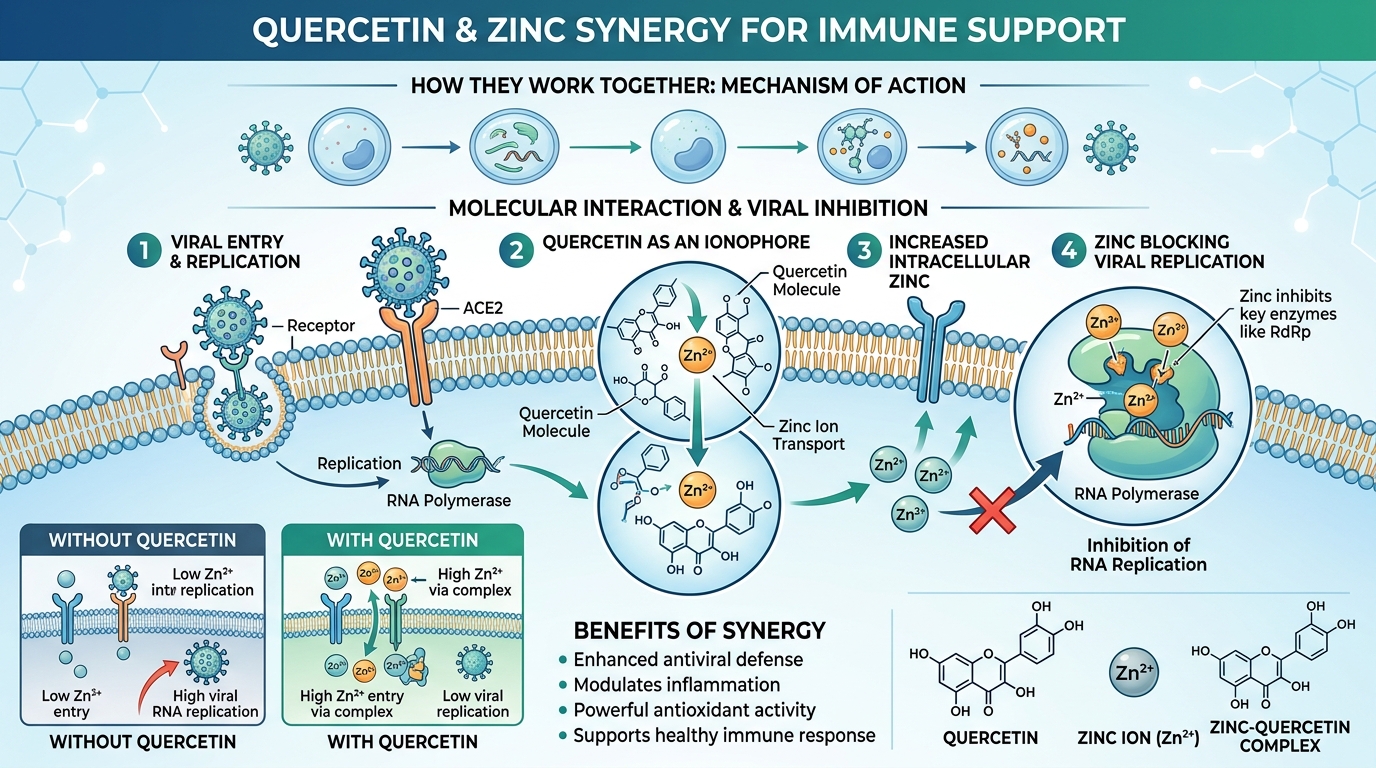
| Quercetin (500mg 2x/day) | Zinc ionophore; ACE2 competition | Receptor binding; immune modulation |
| NAC (600mg 2x/day) | Glutathione precursor; mucolytic | Oxidative stress; glutathione depletion |
| Vitamin D3 (5,000 IU/day) | Immune regulation; anti-inflammatory | Immune dysregulation; deficiency correction |
| Zinc (30-50mg/day) | Viral RNA polymerase inhibition | Supports quercetin's antiviral mechanism |
Within this framework, nattokinase and bromelain serve complementary roles and are the only two supplements in the protocol that provide direct enzymatic degradation of spike proteins themselves. The other supplements reduce the downstream damage caused by spike proteins but do not physically degrade the spike proteins in the way these two proteolytic enzymes do.
Best Brands and Where to Buy
Quality matters enormously with proteolytic enzymes. Look for products that provide clear potency information (FU for nattokinase, GDU for bromelain), use third-party testing, and specify the source organism/food.
Top Nattokinase Products
Doctor's Best Nattokinase (2,000 FU)
Widely considered the gold-standard consumer nattokinase product. Uses NSK-SD nattokinase — the most studied form, with over 17 clinical studies. Standardized to 2,000 FU per capsule. Non-GMO, tested for potency. Available on Amazon. Approximately $20-25 for 90 capsules.
Allergy Research Group Nattokinase (100mg, 2,000 FU)
Professional-grade; preferred by integrative physicians. Higher price but exceptional quality control. Available through health practitioner dispensaries and online. Approximately $35-40 for 60 capsules.
Pure Encapsulations Nattokinase
Hypoallergenic; free from common allergens; pharmaceutical-grade manufacturing standards. Excellent choice for those with sensitivities. Available on Amazon and health food stores.
Top Bromelain Products
NOW Foods Bromelain (500mg, 2,400 GDU/g)
Best value; standardized potency; NOW Foods has excellent quality control and third-party testing. A 60-capsule bottle costs approximately $10-14 on Amazon.
Integrative Therapeutics Bromelain
Professional-grade; used in clinical settings. Higher potency (2,400 GDU/g), excellent bioavailability studies. Available through practitioners and online.
Combination Products (Nattokinase + Bromelain)
Several manufacturers now offer combination proteolytic enzyme formulas. Look for products containing both enzymes at the correct doses (2,000 FU nattokinase + 500mg bromelain per serving). The product featured on our main protocol page at $53.95 includes both alongside curcumin for convenient all-in-one dosing. View on Amazon →