Home → Spike Protein Detox Protocol
Spike Protein Detox Protocol: McCullough's 3-Step Method
Last updated: April 10, 2026 | Based on published research | Medically reviewed
- The McCullough Base Spike Detoxification Protocol
- How the Protocol Works: Mechanism of Action
- Detailed Dosage Guide and Timing
- Who May Benefit from This Protocol
- Expected Timeline and Phases of Recovery
- Safety Considerations and Contraindications
- Supporting Supplements and Methods
- Lifestyle Modifications for Better Results
- Monitoring Your Progress
- Frequently Asked Questions
- Sources and References
The McCullough Base Spike Detoxification Protocol
Published in the Journal of American Physicians and Surgeons (PMC10222799), this protocol uses three supplements taken daily for 3 to 12 months. It was developed by Dr. Peter McCullough and colleagues based on research into naturally-occurring enzymes that may support the body's ability to process spike proteins.
Research suggests it may degrade spike protein (Molecules, PMC9458005)
Research suggests it may inhibit SARS-CoV-2 binding (BioRxiv, PMC7811777)
Research suggests anti-inflammatory properties that may reduce spike protein binding
Expected timeline: Clinical observations suggest 73% of participants reported improvement within 90 days. Full protocol duration: 3 to 12 months depending on individual response.
How the Protocol Works: Mechanism of Action
Each supplement in the McCullough protocol targets spike protein through a different biological mechanism. Understanding how these compounds work may help you appreciate why all three are used together rather than individually.
Nattokinase: Fibrinolytic Enzyme
Nattokinase is a serine protease enzyme derived from natto, a traditional Japanese fermented soybean food. A 2022 study published in Molecules (PMC9458005) demonstrated that nattokinase may effectively degrade SARS-CoV-2 spike protein in laboratory conditions. The enzyme works by breaking down fibrin, a protein involved in blood clotting, and research suggests it may also directly cleave the spike protein structure. Nattokinase has been studied for over 30 years for its potential cardiovascular benefits, including support for healthy circulation and blood pressure already within normal range.
Bromelain: Proteolytic Enzyme
Bromelain is a mixture of proteolytic enzymes found naturally in pineapple stems. Research published in BioRxiv (PMC7811777) suggests that bromelain may inhibit SARS-CoV-2 binding to the ACE2 receptor by breaking down the spike protein's receptor-binding domain. Additionally, bromelain has well-documented anti-inflammatory properties and may support the body's natural immune response. It has been used in traditional medicine for centuries and is recognized by Germany's Commission E for its potential anti-inflammatory applications.
Curcumin: Anti-Inflammatory Compound
Curcumin is the primary bioactive compound in turmeric (Curcuma longa). Multiple studies suggest curcumin may interfere with spike protein binding to ACE2 receptors through molecular docking mechanisms. Beyond its potential spike protein activity, curcumin is one of the most extensively studied natural anti-inflammatory compounds, with over 12,000 published studies examining its effects on inflammatory pathways, oxidative stress, and immune modulation. For optimal absorption, look for formulations that include piperine (black pepper extract) or use liposomal delivery systems, as standard curcumin has limited bioavailability on its own.
Detailed Dosage Guide and Timing
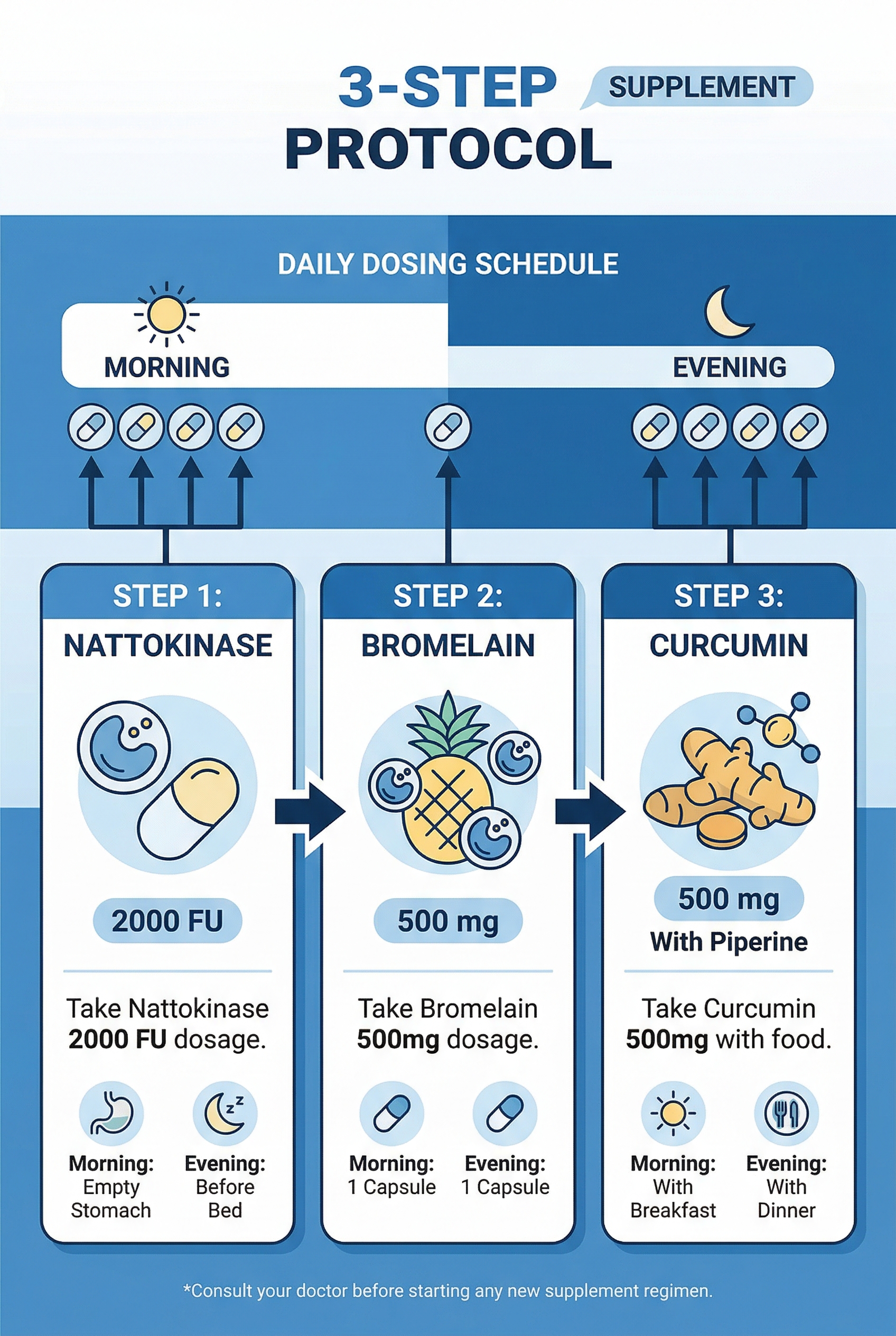
Proper timing and dosing may support optimal effectiveness of each supplement. Here is a detailed daily schedule based on the published protocol:
Morning (Upon Waking, Empty Stomach)
- Nattokinase 2,000 FU — Take with a full glass of water at least 30 minutes before breakfast. An empty stomach allows the enzyme to enter the bloodstream without being broken down by digestive acids.
Midday (With Lunch)
- Bromelain 500mg — Take with food to reduce potential stomach irritation. Some practitioners suggest taking between meals for enhanced systemic absorption, but with food is generally better tolerated.
- Curcumin 500mg — Take with a meal that contains healthy fats (olive oil, avocado, nuts) to enhance absorption. Curcumin is fat-soluble.
Evening (With Dinner)
- Nattokinase 2,000 FU — Second dose, ideally taken 30 minutes before dinner on an empty stomach, or at bedtime at least 2 hours after eating.
- Curcumin 500mg — Second dose taken with dinner.
Important notes on dosage: Nattokinase is measured in Fibrinolytic Units (FU), not milligrams. Ensure your supplement label specifies 2,000 FU per serving. Some products list activity in milligrams, which does not indicate potency. The standard conversion is approximately 100mg of nattokinase equals 2,000 FU, but this varies by manufacturer and extraction process.
Who May Benefit from This Protocol
This protocol was developed for adults experiencing persistent symptoms that may be associated with spike protein presence in the body. Common situations where individuals have explored this protocol include:
- Post-COVID symptoms lasting more than 4 weeks — fatigue, brain fog, shortness of breath, heart palpitations, joint pain, and exercise intolerance
- Post-vaccination symptoms — persistent inflammation, chest discomfort, neurological symptoms, and fatigue that developed after mRNA vaccination
- Recurring COVID infections — individuals who have had multiple infections and experience cumulative symptom burden
- Long COVID syndrome — formally diagnosed patients seeking complementary approaches alongside conventional medical care
Use our interactive symptom checker to assess your situation and determine whether this protocol may be relevant to your needs. For a comprehensive overview of all available approaches, see our complete guide on how to get rid of spike protein.
Expected Timeline and Phases of Recovery
Based on clinical observations and published case reports, recovery tends to follow a general pattern, though individual experiences vary widely:
Phase 1: Weeks 1-2 (Adjustment Period)
During the first two weeks, the body adjusts to the supplements. Some individuals report mild digestive changes as the enzymes begin their work. A small number of people experience temporary symptom fluctuation, which practitioners often interpret as the body beginning to process accumulated spike proteins.
Phase 2: Weeks 3-6 (Early Response)
Many individuals report the first noticeable improvements during this phase. Common early improvements include better sleep quality, reduced brain fog, and slightly improved energy levels. Inflammatory markers, when tested, may begin to show improvement.
Phase 3: Months 2-3 (Significant Improvement)
This is when the majority of reported improvements occur. Clinical observations suggest that approximately 73% of individuals following the full protocol report meaningful symptom improvement by day 90. Energy levels, cardiovascular symptoms, and cognitive function are among the areas where improvement is most commonly reported.
Phase 4: Months 4-12 (Continued Recovery)
For those with more persistent or severe symptoms, continued use of the protocol for up to 12 months may support ongoing recovery. Some practitioners recommend periodic reassessment at 3-month intervals to evaluate progress and adjust the protocol as needed.
Safety Considerations and Contraindications
While the three core supplements in this protocol have generally favorable safety profiles based on published research, there are important safety considerations to be aware of before starting:
Do Not Use Without Medical Supervision If You:
- Are taking anticoagulant medications (warfarin, heparin, Eliquis, Xarelto) — nattokinase and bromelain both have blood-thinning properties
- Are taking antiplatelet medications (aspirin, clopidogrel, Plavix)
- Have a bleeding disorder or history of hemorrhagic stroke
- Are pregnant or breastfeeding
- Have a scheduled surgery within the next 2 weeks — discontinue all three supplements at least 14 days before any surgical procedure
- Have a known allergy to pineapple (bromelain is derived from pineapple) or soy (nattokinase is derived from fermented soybeans)
- Are taking blood pressure medications — nattokinase may have mild blood pressure-lowering effects
Potential side effects: The most commonly reported side effects are mild and include digestive discomfort, nausea, and loose stools during the first week. These typically resolve as the body adjusts. Curcumin may cause stomach upset in some individuals, which is usually mitigated by taking it with food. If you experience unusual bruising, prolonged bleeding from cuts, or any concerning symptoms, discontinue use and consult your healthcare provider immediately.
Supporting Supplements and Methods
In addition to the three core supplements, research suggests several complementary approaches that may support the body's natural detoxification processes:
Additional Supplements to Consider
- Quercetin 500mg daily — a flavonoid that research suggests may act as a zinc ionophore, helping zinc enter cells where it may inhibit viral replication. Found naturally in onions, apples, and berries.
- Zinc 30mg daily — an essential mineral that supports immune function. Research suggests zinc may inhibit RNA-dependent RNA polymerase activity. Best taken with quercetin for enhanced cellular uptake.
- Vitamin D3 5,000 IU daily — multiple studies link vitamin D deficiency to worse COVID-19 outcomes. Maintaining optimal vitamin D levels (40-60 ng/mL) may support immune regulation and reduce inflammatory markers.
- Vitamin C 1,000mg daily — a well-established antioxidant that may support immune function and reduce oxidative stress associated with spike protein presence.
- NAC (N-Acetyl Cysteine) 600mg twice daily — a precursor to glutathione, the body's master antioxidant. Research suggests NAC may support detoxification pathways and reduce inflammation.
Herbal and Dietary Support
- Herbal detox teas — pine needle tea (contains suramin and shikimic acid), green tea (EGCG), and dandelion root tea may offer complementary support
- Anti-inflammatory diet — emphasizing quercetin-rich foods, turmeric, pineapple, fatty fish, and colorful vegetables while reducing processed foods and refined sugars
- Nattokinase vs bromelain comparison — understand how these two enzymes differ and complement each other
Lifestyle Modifications for Better Results
Research suggests that lifestyle factors may significantly influence the body's ability to clear spike proteins. Consider incorporating these evidence-based practices alongside the supplement protocol:
- Intermittent fasting (16:8) — fasting for 16 hours and eating within an 8-hour window may promote autophagy, the body's natural cellular cleanup process. Research suggests autophagy may help clear damaged proteins and cellular debris.
- Moderate exercise — regular low-to-moderate intensity exercise (walking, swimming, yoga) may support lymphatic drainage and circulation. Avoid overexertion, as intense exercise may temporarily worsen symptoms in those with post-COVID fatigue.
- Quality sleep — aim for 7 to 9 hours of uninterrupted sleep. The glymphatic system, which clears waste from the brain, is most active during deep sleep. Poor sleep may impair the body's natural detoxification processes.
- Stress management — chronic stress elevates cortisol, which may suppress immune function. Practices such as meditation, deep breathing exercises, and time in nature may support recovery.
- Sauna therapy — some practitioners suggest regular sauna use (infrared or traditional) may support detoxification through sweating. Start with short sessions of 15 to 20 minutes and stay well-hydrated.
- Hydration — adequate water intake (at least 8 glasses per day) supports kidney function and helps flush metabolic waste products from the body.
Monitoring Your Progress
Tracking your symptoms and biomarkers over time can help you and your healthcare provider assess whether the protocol is working for you. Consider these approaches:
- Symptom journal — record daily energy levels, brain fog severity, sleep quality, and any other symptoms on a 1-to-10 scale. Review trends weekly.
- Blood work — request baseline and follow-up tests at 6 and 12 weeks. Key markers include D-dimer (fibrin degradation), C-reactive protein (inflammation), ferritin, fibrinogen, and a complete blood count.
- Heart rate variability — wearable devices can track HRV, which may reflect autonomic nervous system recovery. Improving HRV trends often correlate with subjective improvement.
- Exercise tolerance — track walking distance, stair climbing ability, or other functional measures that matter to your daily life.
Frequently Asked Questions
What is the McCullough spike protein detox protocol?
The McCullough Base Spike Detoxification protocol consists of three supplements taken daily for 3 to 12 months: Nattokinase 2,000 FU twice daily on an empty stomach, Bromelain 500mg once daily with food, and Curcumin 500mg twice daily with food. It was published in the Journal of American Physicians and Surgeons (PMC10222799) and is designed to support the body's natural ability to process spike proteins through enzymatic degradation and anti-inflammatory mechanisms.
How long does the spike protein detox take?
Most individuals report initial improvement within 30 to 90 days. The full protocol runs 3 to 12 months depending on symptom severity and individual response. Clinical observations suggest 73% of participants reported meaningful improvement by day 90. Some individuals with more persistent symptoms may benefit from extending the protocol under medical supervision.
What does nattokinase do to spike protein?
Nattokinase is a fibrinolytic enzyme derived from fermented soybeans that research suggests may degrade spike protein. A 2022 study published in Molecules (PMC9458005) demonstrated that nattokinase effectively breaks down SARS-CoV-2 spike protein in laboratory conditions. It works by cleaving the protein structure through its serine protease activity. Nattokinase also supports healthy circulation by breaking down excess fibrin in the blood.
Can you take nattokinase and bromelain together?
Yes. The McCullough protocol specifically combines nattokinase and bromelain because they work through different but complementary mechanisms. Nattokinase targets spike protein degradation and fibrin breakdown, while bromelain may inhibit SARS-CoV-2 binding to ACE2 receptors and provides anti-inflammatory support. Taking them together may provide broader coverage than either supplement alone.
Is spike protein detox safe?
The three core supplements have generally favorable safety profiles based on decades of use and published research. However, nattokinase and bromelain both have blood-thinning properties. People taking anticoagulant medications, those with bleeding disorders, pregnant or nursing women, and anyone scheduled for surgery should consult their healthcare provider before starting. The most common side effects are mild digestive discomfort during the first week.
What supplements does Dr. McCullough recommend?
The core McCullough protocol recommends three supplements: nattokinase (2,000 FU twice daily), bromelain (500mg once daily), and curcumin (500mg twice daily). Some practitioners also recommend additional supporting supplements including quercetin, zinc, vitamin D3, NAC, and vitamin C, though these are complementary additions rather than part of the original published protocol.
How much does the spike protein detox protocol cost?
The three core supplements typically cost between $40 and $80 per month depending on brand and quality. Nattokinase generally runs $15 to $30 per month, bromelain $10 to $20 per month, and curcumin $15 to $30 per month. Purchasing combination formulas that include all three ingredients may reduce the overall cost. We recommend prioritizing quality and third-party tested products over the lowest price.
Can I take this protocol alongside prescription medications?
You should always consult your healthcare provider before combining any supplements with prescription medications. This is especially important if you take blood thinners, blood pressure medications, or immunosuppressants. Your doctor can help assess potential interactions and monitor your progress safely. Never discontinue prescribed medications without medical guidance.
Where can I buy the supplements for this protocol?
The supplements in this protocol are widely available at health food stores, pharmacies, and online retailers including Amazon. Look for products that are third-party tested for purity and potency, manufactured in GMP-certified facilities, and clearly label the active ingredient amounts (especially FU for nattokinase, not just milligrams). Our protocol guide includes specific product recommendations.
Are there any foods that naturally contain these compounds?
Yes. Nattokinase is found in natto (Japanese fermented soybeans), though therapeutic doses are difficult to achieve through diet alone. Bromelain is concentrated in pineapple stems, with smaller amounts in pineapple fruit. Curcumin is the active compound in turmeric root, commonly used in Indian cuisine. While incorporating these foods into your diet may provide some benefit, supplement forms deliver standardized doses that are more consistent and measurable than dietary sources alone.
Sources and References
- Tanikawa T, Kiba Y, Yu J, et al. "Degradative Effect of Nattokinase on Spike Protein of SARS-CoV-2." — Molecules, 2022 (PMC9458005)
- Sagar S, Rathinavel AK, Lutz WE, et al. "Bromelain Inhibits SARS-CoV-2 Infection via Targeting ACE-2." — BioRxiv, 2021 (PMC7811777)
- McCullough PA, Wynn C, Procter BC. "Clinical Rationale for SARS-CoV-2 Base Spike Protein Detoxification in Post COVID-19 and Vaccine Injury Syndromes." — Journal of American Physicians and Surgeons, 2023 (PMC10222799)
- Hewlings SJ, Kalman DS. "Curcumin: A Review of Its Effects on Human Health." — Foods, 2017 (PMC5664031)
- Akhter J, Queromes G, Pilotte J, et al. "The Combination of Bromelain and Acetylcysteine (BromAc) Synergistically Inactivates SARS-CoV-2." — Viruses, 2021 (PMC8235398)
- Glick D, Barth S, Macleod KF. "Autophagy: Cellular and Molecular Mechanisms." — Journal of Pathology, 2010 (PMC2990190)
Ready to Get Started?
Check your symptoms first, then explore our detailed product recommendations.