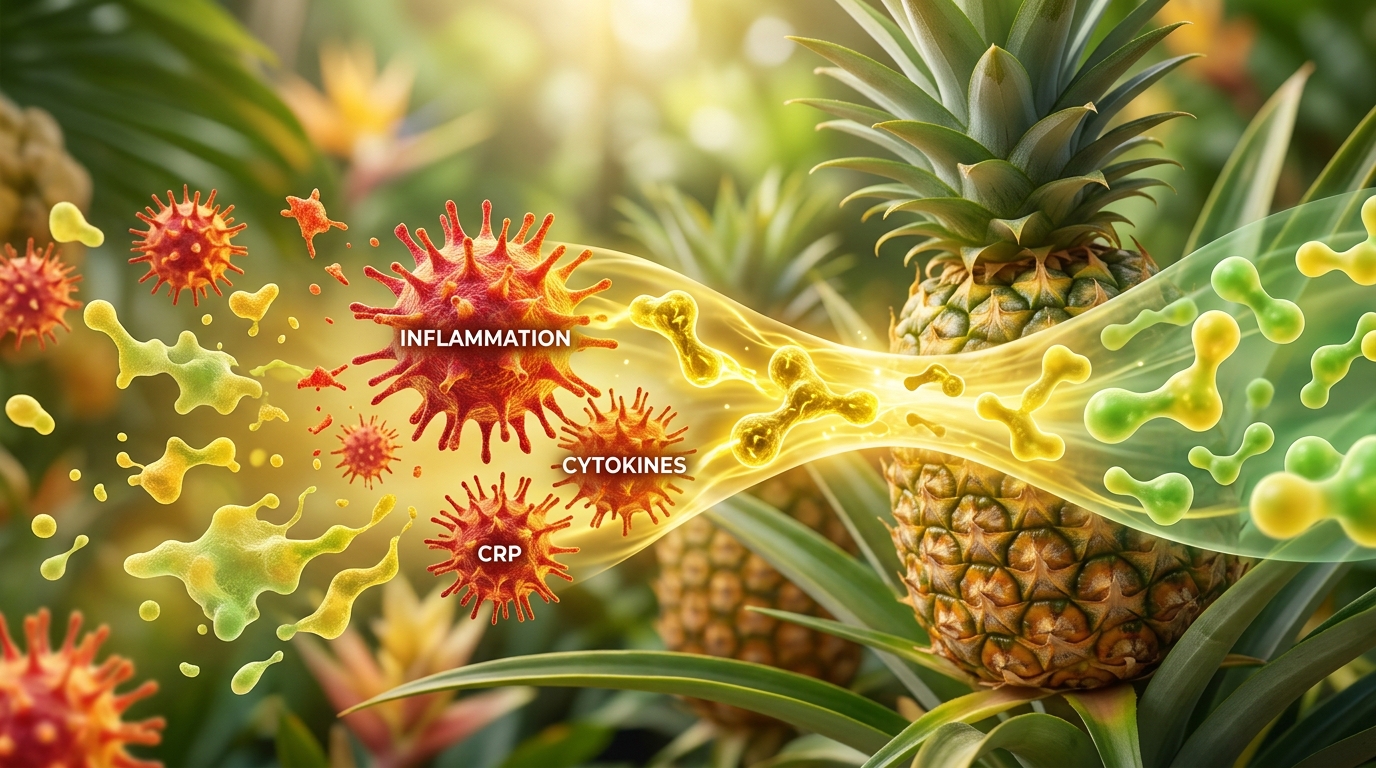
What Is Bromelain?
Bromelain is a complex mixture of proteolytic (protein-digesting) enzymes extracted from the stem and fruit of the pineapple plant (Ananas comosus). First isolated in 1891 and introduced as a therapeutic compound in 1957, bromelain has been used for over 70 years in clinical practice, primarily in Europe, South America, and Japan, for conditions ranging from inflammation and edema to digestive disorders and wound healing.
The term "bromelain" actually refers to a mixture of at least eight protease enzymes, along with phosphatases, glucosidases, peroxidases, and other biologically active compounds. Stem bromelain (EC 3.4.22.32) is the most abundant and therapeutically relevant component, and most commercial supplements are derived from pineapple stems rather than the fruit, as the stem contains higher enzyme concentrations.
Germany's Commission E (the regulatory body equivalent to the FDA for herbal medicine) has approved bromelain for the treatment of swelling and inflammation, particularly after surgical procedures and traumatic injuries. In the United States, bromelain is classified as a dietary supplement and is widely available without prescription.
How Bromelain Works: Mechanism of Action
Bromelain's therapeutic effects stem from multiple overlapping mechanisms, making it more versatile than single-mechanism anti-inflammatory drugs:
Proteolytic Activity
As a protease (protein-digesting enzyme), bromelain breaks down proteins into smaller peptides and amino acids. When taken on an empty stomach, bromelain is absorbed into the bloodstream in enzymatically active form, where it can break down inflammatory mediators, immune complexes, and damaged tissue proteins. This proteolytic action is central to its anti-inflammatory, anti-edema, and fibrinolytic effects.
Anti-Inflammatory Pathways
Bromelain reduces inflammation through multiple pathways that differ from conventional NSAIDs:
- Prostaglandin modulation: Bromelain reduces pro-inflammatory prostaglandins (PGE2) while preserving protective prostaglandins, unlike NSAIDs which inhibit all prostaglandin production
- Thromboxane reduction: Bromelain decreases thromboxane A2, reducing both inflammation and platelet aggregation
- Bradykinin degradation: Bromelain breaks down bradykinin, an inflammatory peptide that causes pain, swelling, and increased vascular permeability
- Cytokine modulation: Research shows bromelain reduces pro-inflammatory cytokines (IL-1B, IL-6, TNF-alpha) while increasing anti-inflammatory cytokines (IL-10)
- Immune cell modulation: Bromelain modifies CD44 surface markers on immune cells, reducing leukocyte migration to inflammation sites and dampening excessive immune responses
Fibrinolytic Activity
Bromelain has documented fibrinolytic (clot-dissolving) activity, though weaker than nattokinase. It activates plasminogen, the precursor to plasmin (the body's primary clot-dissolving enzyme), and may directly degrade fibrin. This fibrinolytic activity contributes to bromelain's anti-edema effects and makes it complementary to nattokinase in spike protein detox protocols.
8 Research-Backed Bromelain Benefits
1. Post-Surgical and Traumatic Inflammation
Bromelain's most extensively studied application is reducing post-surgical and traumatic swelling, pain, and bruising. A 2004 systematic review by Maurer in Evidence-Based Complementary and Alternative Medicine analyzed 10 clinical trials and concluded that bromelain significantly reduced swelling, pain, and healing time after surgical and traumatic injuries. Dental and orthopedic surgeries showed the most consistent benefits.
A 2016 randomized controlled trial published in Clinical Oral Investigations found that bromelain (300 mg/day for 3 days) significantly reduced pain, swelling, and trismus (jaw stiffness) after third molar extraction compared to the NSAID diclofenac, with fewer side effects.
2. Sinusitis and Respiratory Support
Bromelain is one of the best-studied natural treatments for sinusitis. Its mucolytic (mucus-thinning) and anti-inflammatory effects work together to reduce nasal congestion, improve drainage, and relieve sinus pressure. A 2006 pilot study published in In Vivo found that bromelain supplementation resolved symptoms of chronic sinusitis in 83% of patients, with significant improvements in nasal obstruction, nasal discharge, and headache.
Germany's Commission E has specifically approved bromelain for the treatment of acute sinusitis. The recommended dose for sinusitis is 500-1,000 mg daily in divided doses on an empty stomach.
3. Joint Pain and Osteoarthritis
Bromelain's anti-inflammatory and analgesic properties make it a popular natural approach for joint pain. A 2004 randomized controlled trial published in Phytomedicine compared bromelain (400 mg/day) to diclofenac (100 mg/day) for osteoarthritis of the knee. Both treatments produced equivalent improvements in pain, stiffness, and physical function, with bromelain showing significantly better tolerability.
A 2006 systematic review in Arthritis Research and Therapy concluded that bromelain showed therapeutic efficacy for osteoarthritis, with benefits comparable to NSAIDs but with a superior safety profile for long-term use.
4. Digestive Support
When taken with meals, bromelain assists in the digestion of dietary proteins by breaking them down into smaller, more easily absorbed peptides and amino acids. This is particularly helpful for individuals with pancreatic insufficiency, low stomach acid, or digestive discomfort after protein-rich meals. Research suggests that bromelain may also reduce intestinal inflammation, making it potentially beneficial for conditions like inflammatory bowel disease (IBD).
5. Immune System Modulation
Bromelain has demonstrated immunomodulatory effects that go beyond simple immune "boosting." Research by Onken et al. (2008) in Cell Immunology found that bromelain modifies CD44 surface molecules on activated immune cells, which affects their ability to migrate to and accumulate at sites of inflammation. This "tuning" of immune cell behavior may help prevent excessive inflammation while maintaining effective immune surveillance.
Additionally, a 2016 study in Biomedical Reports found that bromelain enhanced dendritic cell maturation and T-cell activation in vitro, suggesting it may help prime the adaptive immune system against pathogens while controlling inflammatory damage.
6. Cardiovascular and Blood Health
Bromelain's antiplatelet and fibrinolytic activities may support cardiovascular health. Research has shown that bromelain inhibits platelet aggregation (clumping), reduces blood viscosity, and may lower the risk of thrombotic events. A 1972 study by Heinicke et al. demonstrated that bromelain reduced platelet aggregation in human blood in a dose-dependent manner, with effects lasting several hours after a single oral dose.
While bromelain alone is not as potent as nattokinase for fibrinolysis, the combination of the two provides complementary anticoagulant and anti-thrombotic effects through different mechanisms.
7. Wound Healing and Burn Care
Bromelain has been investigated for wound care due to its ability to selectively remove damaged tissue (debridement) while leaving healthy tissue intact. NexoBrid, a bromelain-based pharmaceutical product, has been approved in Europe and several other countries for enzymatic debridement of deep partial and full-thickness burns. Clinical trials have shown it removes burn eschar within 4 hours, significantly faster than standard surgical debridement.
8. Cancer Research
Preliminary research suggests bromelain may have anticancer properties. A 2010 review in Cancer Letters summarized evidence that bromelain inhibits cancer cell growth, reduces metastasis, and enhances the efficacy of certain chemotherapy drugs in laboratory models. Bromelain appears to work through multiple mechanisms including modulation of immune surveillance, induction of apoptosis, and inhibition of NF-kB-mediated survival signals. Human clinical trials are limited, and bromelain should not be considered a cancer treatment.
Bromelain in the Spike Protein Detox Protocol
Bromelain is one of three core components of the McCullough spike protein detox protocol, alongside nattokinase and curcumin. Its inclusion is based on both its proteolytic and anti-inflammatory properties.
The Scientific Rationale
A 2021 study by Akhter et al. found that bromelain (in combination with acetylcysteine) effectively reduced spike protein expression on cultured cells. The researchers proposed that bromelain's proteolytic action may directly cleave spike protein structures, while its anti-inflammatory effects help mitigate spike protein-induced inflammation.
Within the McCullough protocol, bromelain serves multiple complementary roles:
- Proteolytic degradation: Breaks down protein structures including spike protein
- Anti-inflammatory synergy: Reduces NF-kB-mediated inflammation triggered by spike protein, complementing curcumin's anti-inflammatory effects
- Fibrinolytic support: Adds mild clot-dissolving activity that complements nattokinase's more potent fibrinolytic action
- Immune modulation: Helps rebalance immune function that may be dysregulated by persistent spike protein
- Absorption enhancement: Bromelain may enhance the absorption of co-administered supplements, including curcumin and quercetin
McCullough Spike Protein Detox Protocol
- Nattokinase: 2,000 FU twice daily (empty stomach) — Primary fibrinolytic and spike protein degrading agent
- Bromelain: 500 mg once daily (empty stomach) — Broad-spectrum protease and anti-inflammatory
- Curcumin: 500 mg twice daily (with food/fat) — Potent NF-kB inhibitor and anti-inflammatory
Duration: Minimum 3 months; 6-12 months for persistent symptoms. Take proteolytic enzymes (nattokinase, bromelain) on an empty stomach; take curcumin with meals containing fat for absorption.
Bromelain Dosage Guide
| Purpose | Daily Dosage | Timing | Duration |
|---|---|---|---|
| Spike protein protocol | 500 mg (2,400 GDU/g) | Empty stomach, once daily | 3-12 months |
| Anti-inflammatory (general) | 200-500 mg 2-3x/day | Empty stomach, between meals | As needed |
| Sinusitis | 500-1,000 mg/day divided | Empty stomach | Until resolution |
| Joint pain / arthritis | 400-500 mg 2-3x/day | Empty stomach | Ongoing |
| Post-surgical recovery | 500 mg 3x/day | Empty stomach | 3-7 days post-op |
| Digestive support | 200-500 mg | WITH meals | As needed |
When to Take Bromelain: Timing Matters
- Empty stomach (systemic effects): Bromelain is absorbed into the bloodstream in active form, where it exerts anti-inflammatory, fibrinolytic, and proteolytic effects throughout the body. This is how to take it for the spike protein protocol, joint pain, sinusitis, and immune support.
- With meals (digestive effects): Bromelain stays in the GI tract and helps break down dietary proteins, improving digestion. Little to no systemic absorption occurs.
For the spike protein detox protocol and anti-inflammatory use, take bromelain at least 30 minutes before meals or 2 hours after eating. Many people find it convenient to take bromelain and nattokinase together first thing in the morning on an empty stomach, then wait 30-60 minutes before breakfast.
Side Effects and Drug Interactions
Common Side Effects (Mild)
- Nausea or stomach discomfort (more common at higher doses)
- Diarrhea or loose stools
- Increased heart rate (rare)
- Allergic reactions in people sensitive to pineapple
- Pineapple allergy: Do not take bromelain if you are allergic to pineapple or any member of the Bromeliaceae family
- Blood thinners (warfarin, heparin, aspirin): Bromelain may enhance anticoagulant and antiplatelet effects, increasing bleeding risk
- Antibiotics (amoxicillin, tetracyclines): Bromelain may increase blood levels of these antibiotics
- Surgery: Discontinue bromelain at least 2 weeks before scheduled surgery
- Pregnancy: Insufficient safety data; avoid high-dose supplementation during pregnancy
- Peptic ulcers: Bromelain may irritate existing ulcers; use with caution
Synergistic Combinations
- Bromelain + Nattokinase + Curcumin: The McCullough Protocol. Nattokinase provides targeted fibrinolysis and spike protein degradation, bromelain adds broad proteolytic and anti-inflammatory effects, curcumin delivers potent NF-kB inhibition. Each component addresses different aspects of spike protein-related pathology.
- Bromelain + Quercetin: Bromelain enhances quercetin absorption by reducing intestinal inflammation that impairs nutrient uptake. Many supplement manufacturers combine these two ingredients for this reason. The combination provides complementary anti-inflammatory effects through different molecular pathways.
- Bromelain + NAC: The Akhter et al. (2021) study specifically tested bromelain with acetylcysteine (NAC) and found synergistic effects on spike protein reduction. NAC's antioxidant and mucolytic properties complement bromelain's proteolytic action.
- Bromelain + Turmeric/Curcumin: Bromelain may enhance curcumin absorption while both compounds independently reduce NF-kB-mediated inflammation. This pairing is included in the McCullough Protocol.
- Bromelain + Serrapeptase: Two proteolytic enzymes with complementary mechanisms. Serrapeptase has stronger anti-biofilm properties, while bromelain has broader anti-inflammatory effects. Some practitioners use both for enhanced proteolytic activity.